In this article
Short version:
• Asbestos remediation requires licensed professionals, strict containment protocols, and EPA/OSHA-compliant disposal — DIY removal is not recommended and may be illegal.
• Identifying asbestos-containing materials before any renovation or demolition is the critical first step.
• Choosing a qualified hazardous abatement contractor protects both occupants and property owners from serious health and legal consequences.
Asbestos remediation is the safe removal of asbestos from a building, home, or worksite. If your property was built before the 1980s and you are planning a renovation or demolition, understanding the proper process for managing asbestos-containing materials (ACMs) is not optional — it is a legal and health obligation.
Asbestos is a hazardous material once widely used in construction for its fire-resistant and insulating properties. When disturbed, asbestos fibers can become airborne, posing serious health risks. For property owners in Regina and across North America, asbestos remediation Regina services follow a structured, regulated process designed to eliminate exposure risks at every stage.
Why Professional Asbestos Removal Is Non-Negotiable
Research indicates there is no safe level of asbestos exposure. Any amount of inhaled fibers may cause asbestos diseases to develop. That makes self-managed removal a serious gamble.
In many cases, people engaged in remodeling and demolition projects have a legal obligation to hire professionals. Do-it-yourself asbestos remediation guides for homeowners exist, but the EPA recommends the general public not attempt to handle asbestos.
Asbestos testing and abatement must follow stringent guidelines set by the Occupational Safety and Health Administration (OSHA) and the Environmental Protection Agency (EPA). Restoration companies, in particular, need to adhere to these standards to protect workers, residents, and themselves from legal consequences, including substantial fines.
According to the EPA’s asbestos laws and regulations, federal standards govern everything from permissible exposure limits to proper disposal of asbestos waste during demolition and renovation work.
The Key Steps in a Safe Asbestos Remediation Process
A compliant remediation project follows a defined sequence. Skipping any step creates liability and health risk.
1. Inspection and Material Identification
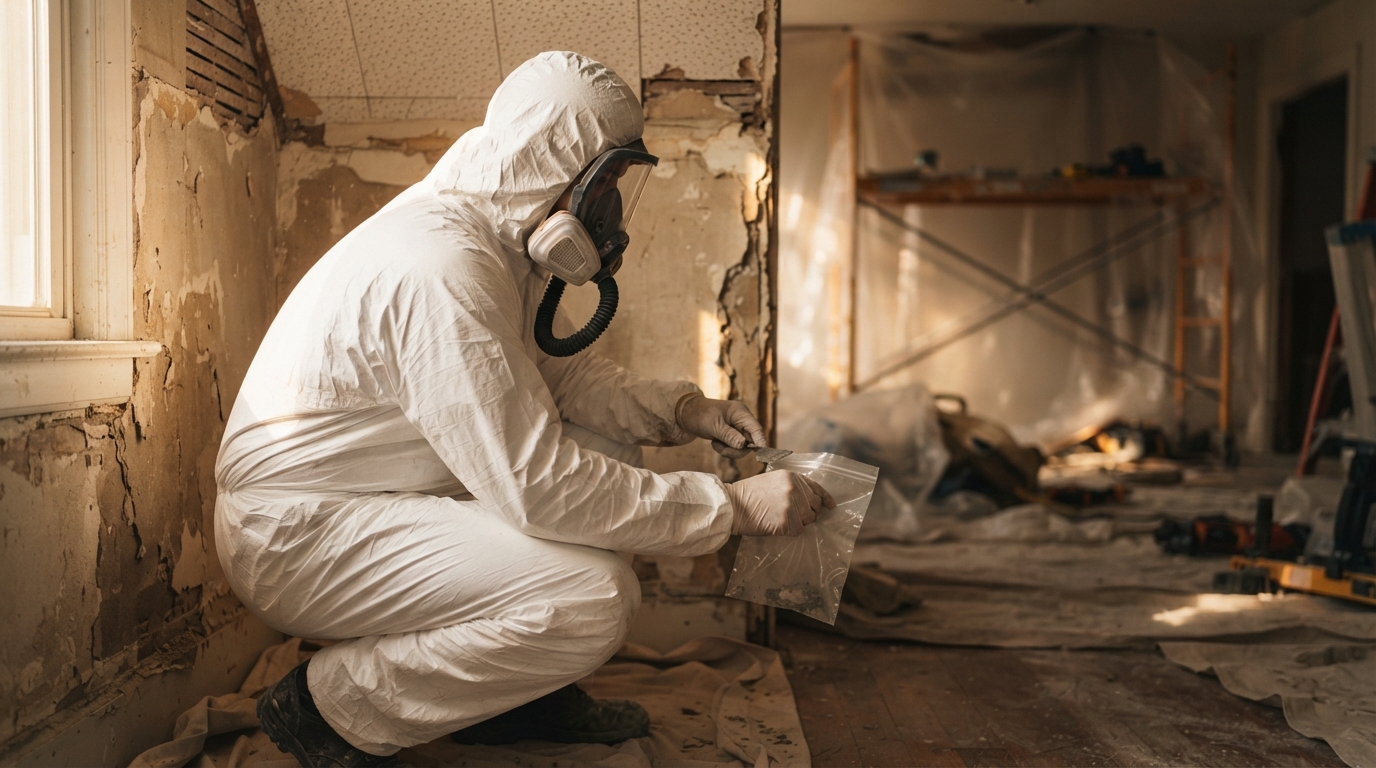
Before starting remediation, an asbestos inspection and assessment are often required to identify the type and location of asbestos-containing materials. Licensed and accredited asbestos inspectors or testing professionals must conduct asbestos testing.
2. Containment Setup
Workers must use designated entry and exit points, wear protective gear like respirators and coveralls, and shower before leaving. These practices prevent asbestos fibers from spreading to other areas.
3. Controlled Removal
Asbestos is a hazardous material commonly found in building materials such as flooring, insulation, and ceiling tiles. Disturbing asbestos can release harmful fibers into the air, posing serious health risks. Experts are trained to safely identify and remove asbestos from your property.
4. Air Quality Monitoring
Air quality monitoring is usually required during and after asbestos removal to ensure that asbestos fibers have not been released into the environment. OSHA mandates that employers control the combined fiber levels in any work environment to remain at or below 0.1 f/cc (8-hour TWA) during abatement or restoration.
5. Proper Disposal
Asbestos materials must be removed, packaged, and disposed of according to EPA regulations, ensuring no fibers are released into the environment. Proper disposal of asbestos-containing materials is critical. Asbestos waste must be carefully packaged, labeled, and transported to authorized disposal facilities in accordance with regulations.
Comparing Common Asbestos Management Options
Not every situation calls for full removal. Here is a quick comparison of the main approaches:
|
Approach |
When It Applies |
Key Consideration |
|
Encapsulation |
ACMs are intact and undisturbed |
Requires ongoing monitoring |
|
Enclosure |
Materials in low-traffic areas |
Does not eliminate the hazard |
|
Full Removal |
Pre-renovation or demolition |
Only permanent solution |
|
Operations and Maintenance |
ACMs in stable condition |
Requires a written O&M plan |
If samples contain asbestos, the asbestos inspector will suggest next steps. They may recommend the materials be encapsulated or completely removed from the area.
Choosing a Qualified Hazardous Abatement Contractor
Certified asbestos workers follow OSHA, EPA, and CDC regulations and handle hazardous materials safely. Verify that the service provider holds the necessary state and federal certifications for asbestos testing, inspection, and abatement.
Businesses typically need to maintain detailed records of all asbestos-related activities, including inspections, work plans, worker training, and disposal documentation. Ask any contractor you hire to provide this documentation before work begins.
Experts at a qualified firm are trained to safely identify and remove asbestos from your property. They conduct thorough inspections and develop a customized abatement plan to ensure your property is safe and compliant with regulations.
Frequently Asked Questions
How do I know if my property contains asbestos? The only reliable way to confirm the presence of asbestos is through sampling and laboratory testing by a licensed inspector. Visual identification alone is not sufficient.
Can I stay in my home during asbestos removal? In most cases, occupants should vacate the affected area during active abatement. Your contractor will specify safe re-entry conditions based on post-clearance air monitoring results.
What happens if asbestos is left undisturbed? Asbestos is commonly found in building materials such as flooring, insulation, and ceiling tiles. Disturbing asbestos can release harmful fibers into the air, posing serious health risks — but intact, undisturbed materials may be managed in place under an operations and maintenance plan.
Is asbestos remediation covered by home insurance? Coverage varies by policy and insurer. Review your policy and speak with your provider before work begins, as some insurers require pre-approval for hazardous abatement claims.
Work With a Trusted Hazardous Abatement Team
Managing asbestos safely requires the right expertise, equipment, and regulatory knowledge. APEC Restoration and Renovations provides verified hazardous abatement solutions in Regina, Saskatchewan, offering comprehensive remediation services that include mold remediation, asbestos removal, lead abatement, and dry ice blasting, with an experienced team equipped to handle a wide range of environmental hazards with precision and care. If you are planning a renovation, demolition, or have discovered a potential hazard in your property, contact APEC Restoration and Renovations to schedule an inspection and get a customized abatement plan.