In this article
Takeaway:
• Unplug the unit and inspect the door seal, hinges, and control panel for damage before scheduling any repair.
• High-voltage components inside a microwave can carry electrical charge even after the appliance is unplugged, so DIY repair is not recommended.
• A licensed technician can safely diagnose sparking, smoking, heating failures, or unusual noises without risking shock or fire.
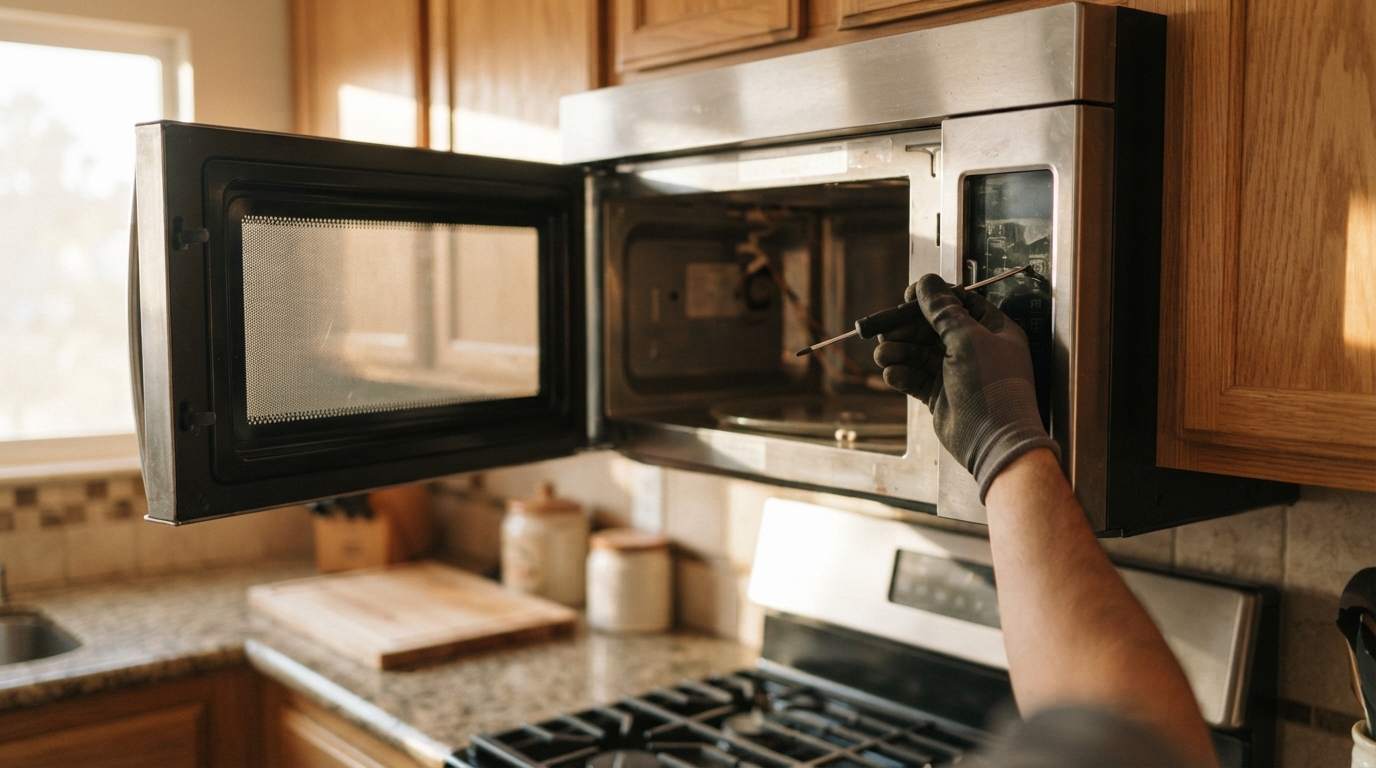
A microwave that sparks, smokes, hums loudly, or fails to heat is signaling a problem that should be checked before the unit is used again. Confirming these warning signs early, and knowing which checks are safe to do yourself versus which require a professional, is the fastest way to avoid injury or further appliance damage. In San Diego, homeowners searching for microwave repair in San Diego CA are typically dealing with one of a handful of common issues: a failing door seal, a malfunctioning turntable motor, a damaged control panel, or a unit that heats unevenly or not at all.
Microwave repair is one of the core services listed by TrueCare Appliance Solutions, alongside refrigerator, oven, dishwasher, and washer repair, for households throughout the San Diego area.
Why Microwave Safety Checks Matter Before Any Repair
Microwaves operate on high voltage, which sets them apart from most other kitchen appliances when something goes wrong internally. According to CPSC guidance on microwave oven repair, the possibility of electrical shock from a microwave oven exists even after the appliance has been disconnected from its power source, and certain internal component failures can cause serious injury even in an unplugged unit.
This is why the commission recommends against attempting internal repairs at home. Before calling for service, it helps to know what you can inspect safely from the outside:
• Door seal and hinges – look for cracks, warping, or gaps where the door does not close flush.
• Control panel response – note whether buttons stick, lag, or fail to register touches.
• Turntable and interior – check for a turntable that spins unevenly or stalls.
• Exterior housing – look for scorch marks, bulging panels, or a loose power cord.
Common Warning Signs That Signal a Repair Is Needed
Certain symptoms point to specific internal failures, and recognizing the pattern can help you describe the problem accurately when scheduling service.
1. Sparking or arcing inside the cavity – often linked to metal contact, a worn waveguide cover, or interior damage.
2. No heat despite normal operation sounds – frequently traced to a failing magnetron or high-voltage diode.
3. Persistent burning smell – may indicate an overheating component or insulation breakdown.
4. Unusual grinding or buzzing – typically a turntable motor or exhaust fan issue.
5. Door that will not seal properly – a safety-critical failure, since the FDA notes that a damaged microwave oven may present a risk of microwave energy leaks and advises contacting a qualified technician if the door hinges, latches, or seals are damaged.
| Symptom | Likely Cause | DIY Safe? |
| Sparking inside cavity | Metal contact, damaged waveguide cover | No |
| No heat, normal sounds | Magnetron or diode failure | No |
| Door will not close/seal | Hinge, latch, or seal damage | No |
| Turntable not rotating | Motor or roller issue | Limited, exterior only |
What a Professional Repair Visit Typically Involves
A qualified technician follows a structured diagnostic process rather than guessing at parts. Understanding this process helps set expectations for the visit and clarifies why professional service is the safer route for internal issues.
• Visual and electrical inspection to confirm the appliance is fully de-energized before any panel is opened.
• Component testing of the magnetron, transformer, diode, and capacitor to isolate the actual fault.
• Door and seal evaluation to confirm the unit will operate without radiation leakage once repaired.
• Functional test after the repair, checking heating consistency and control response before the technician leaves.
TrueCare Appliance Solutions technicians who service San Diego homes generally follow this kind of structured approach when handling microwave repair calls, using established diagnostic steps and manufacturer-approved parts to complete the work.
Frequently Asked Questions
Can I fix a sparking microwave myself? No. Sparking usually points to internal damage or a component failure that requires opening the unit, which carries a real risk of electrical shock even when the appliance is unplugged.
How do I know if my microwave door seal is bad? Look for visible gaps, warping, or a door that does not click firmly shut. A damaged seal is a safety issue that should be evaluated promptly rather than left unaddressed.
Is it cheaper to repair or replace a microwave? This depends on the age of the unit, the specific component that failed, and the model’s original cost. A technician can give you a diagnosis-based estimate so you can compare it against replacement cost before deciding.
How quickly should a smoking or burning-smell microwave be addressed? Immediately. Unplug the unit, stop using it, and avoid opening the cabinet housing until a technician has inspected it.
Getting a Safe, Professional Diagnosis
Microwave problems that involve sparking, smoke, heating failure, or a damaged door seal are not projects to troubleshoot with the cover removed at home. A visual check of the door, control panel, and exterior housing can help you describe the issue clearly, but any repair involving internal components should go to a licensed technician who can test the actual parts and confirm the unit is safe to use again. TrueCare Appliance Solutions serves homeowners across the San Diego area with diagnostic and repair visits for microwaves and other major kitchen appliances, and can help determine whether a repair or replacement makes more sense for your situation.